Sourcing artificial turf from China gives importers and project buyers access to a broad range of products and supplier arrangements. The practical challenge is not finding a low quote. The real challenge is confirming who will manufacture the turf, which specifications are included, how samples relate to bulk production, and where export responsibilities sit. This guide helps Southeast Asian buyers compare Chinese artificial grass suppliers and prepare a purchase-ready RFQ.
Why Source Artificial Turf from China
China remains a major sourcing hub for buyers comparing artificial grass products, manufacturing partners, and export arrangements. You may be evaluating multiple product categories, private-label supply, or project-specific specifications. These options depend on the actual production scope of the supplier, not just the word “factory” in their profile.
To compare quotes effectively, ask every supplier to confirm the same points. Confirm the contracting company, the production steps they control, the product scope they can supply, the available specifications, and the commercial terms for your destination. This levels the playing field, allowing you to compare suppliers based on scope and responsibility, rather than unit price alone.
Manufacturer, Exporter, Wholesaler or Distributor: Identify the Seller’s Role
Supplier labels are not interchangeable. A company may perform more than one role. You need to verify the legal seller and the party responsible for each part of your order.
What an artificial turf manufacturer controls
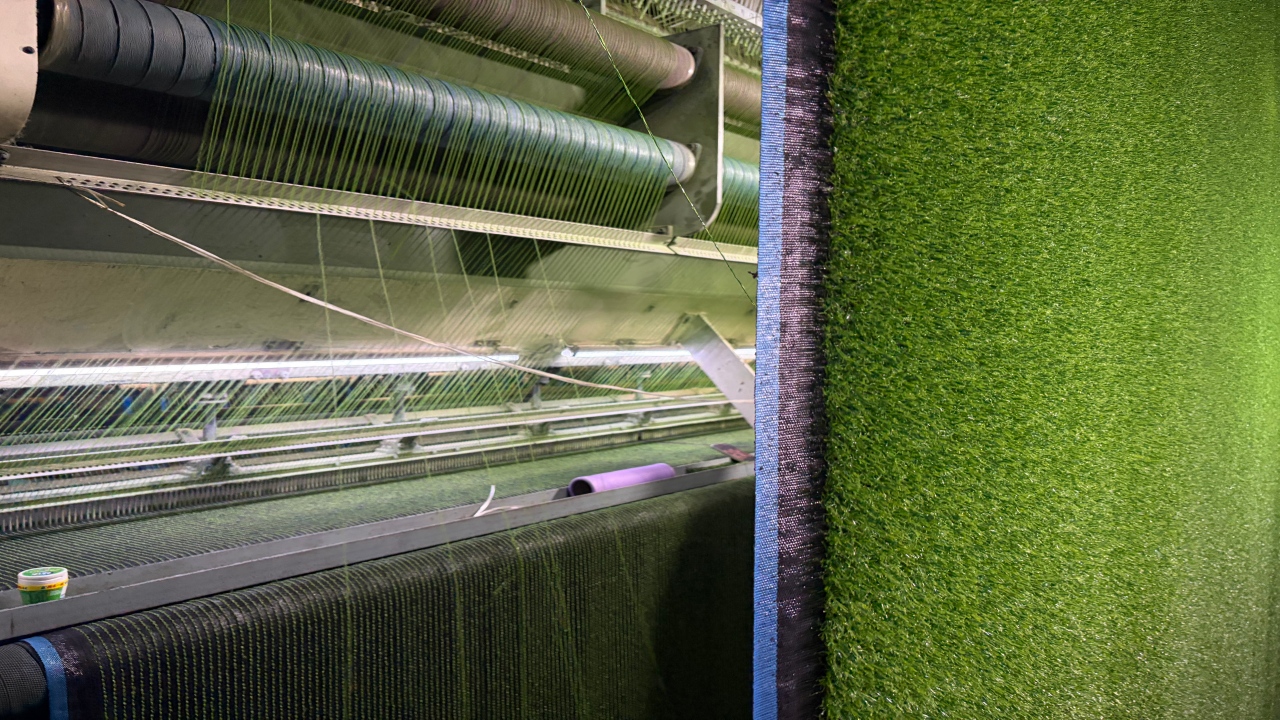
A manufacturer produces some or all stages of the product. For artificial turf, ask which steps are performed in-house: yarn extrusion, tufting, backing or coating, drainage-hole punching, cutting, inspection and packing. A supplier may manufacture certain stages and outsource others. Ask for their actual scope. Do not assume every “manufacturer” controls the full process.
What an exporter, wholesaler or distributor handles
An exporter manages overseas sales; this does not mean they own the factory. A wholesaler buys and resells products. A distributor sells into a specific market and may provide local stock. A contractor manages site preparation or installation. A turf supplier does not become an installation contractor just by selling materials.
This works well when the arrangement is transparent. Confirm who makes the product, who signs the contract, who receives payment, who checks quality, and who handles export documents.
Key questions to clarify a supplier’s identity
- What is the registered name of the company issuing the quotation?
- Which company receives payment and handles the export?
- Which production steps take place at the supplier’s own facility?
- Are any product categories sourced from partner factories?
- Who confirms the approved sample and resolves specification discrepancies?
How to Verify Chinese Artificial Grass Suppliers
Reliable review requires consistent evidence, not just a polished catalogue. Confirm that the company information, factory claims, product documents, and commercial offer refer to the same supplier.
Check the company and contracting entity
Compare the registered company name on the business documents with the quotation, contract, and payment instructions. If different entities appear, request a clear explanation of their roles before placing an order. We recommend completing your own company checks using the verification channels available to you.
Verify the factory and production scope
Request a live video walkthrough or arrange a visit. Ask the supplier to show the production steps they control and explain any outsourced processes. A factory video helps you understand the operation, but it does not replace written specifications, sample approval, or agreed quality checks.
Match the catalogue to the actual supply scope
For each product category, request the model name, current specification sheet, available construction options, and the producing entity. Check whether a catalogue image represents the exact product quoted or a general example. Keep model-specific information separate. A football turf specification, for example, should not be treated as a landscape or tennis turf spec.
Agree on quality evidence
Ask what the supplier checks during production, how results are recorded, and which records they can share. Where a test or report matters to your buyer, identify the exact product, test scope, and issuing body before relying on it. A general company statement is not proof that every model carries the same certification.
Which Artificial Turf Specifications Should Buyers Compare?
Request comparable specifications for the same intended application. A single number rarely describes the full construction, and supplier terminology varies. Use the model specification and approved sample as the reference for each quotation.
PE or PP yarn, pile height, density, stitch rate and Dtex
Confirm whether the pile yarn is PE, PP, or a combination. Ask how pile height, stitch rate, density, and Dtex are stated for the offered model. Buyers comparing polyethylene artificial grass (PE artificial grass) or polypropylene artificial grass should request the exact yarn composition. Clarify units and measurement basis. Stitch rate and density are related but not interchangeable; ask the supplier to show the calculation used in their specification. Compare like-for-like values for the same product type.
Backing, coating and drainage holes
Ask for the backing construction and coating material for the specific model. Confirm whether drainage holes are present and how they are described. Drainage holes are a product feature. They do not guarantee site drainage. The base, levels, falls, outlets, and installation design remain part of the project’s drainage plan.
Roll dimensions and packing information
Confirm roll width, length, tolerance, roll identification, packing material, and estimated volume for shipment. Artificial grass rolls differ by model and order. Confirm the roll-turf format in writing. Ask how roll labels identify the model, color, or batch. Do not assume the same roll format applies to every order.
Match the Product Category to the Application
Application determines which product page and specification deserve closer review. The categories below are starting points, not performance guarantees. If the project specifies infill turf or non-infill artificial grass, confirm the required system and supply scope for that model. A product label alone does not establish the right configuration. Where a brief specifies silica sand infill, record the grade, quantity, and sourcing responsibility in the RFQ so supplier offers can be compared accurately.
Landscape and commercial areas
Landscape artificial grass is used across residential and commercial projects. Define the setting, expected use, appearance brief, and exposure before comparing models. Review our landscape artificial grass product range for product-specific information.
Sports and football projects
Sports turf covers different sports and project briefs. A general sports category does not establish suitability for a particular competition system. For football product details, compare our football artificial grass specifications. For field-system planning and project-cost inputs, use our soccer field project planning and cost guide.
Tennis and Padel projects
Tennis and Padel surfaces have sport-specific requirements. Share the intended sport, project specification, and relevant surface requirements with the supplier. Request the exact model documentation. Confirm the product range and technical evidence before treating a sports-turf description as a match.
Wholesale, OEM, Private Label and Custom Turf
These terms describe different parts of a commercial order. Ask the supplier to define what is included instead of assuming one label covers every service.
Wholesale supply
Wholesale describes a purchasing arrangement for resale or larger-volume supply. Confirm the product mix, order quantities, repeat-order specifications, packing, labels, batch identification, and delivery schedule. A wholesale price is useful only when the quoted product and terms match your planned order.
OEM and private label
OEM means production to your agreed product or brand requirements. Private label refers to selling the product under your brand. Confirm permitted logo use, artwork approval, label content, packaging design, and ownership of supplied artwork. Ask whether the arrangement changes MOQ, sample preparation, or lead time.
Custom pile height, colour and packaging
For custom requests, provide a written specification, reference sample, or color reference. If you need custom size turf, state the required roll dimensions and ask the supplier to confirm feasibility, tolerances, minimum quantity, sample timing, and any cost or schedule effects before production. Do not treat “custom” as proof that every color or package is available at any quantity.
Confirm MOQ, Samples, Packaging and Production Lead Time
Before a purchase order, request written confirmation of the commercial conditions for the exact product and quantity. MOQ, sample options, and production timing depend on the model, yarn availability, customization, and order size. A figure shown for one product does not apply to another.
Request and approve a sample before bulk production
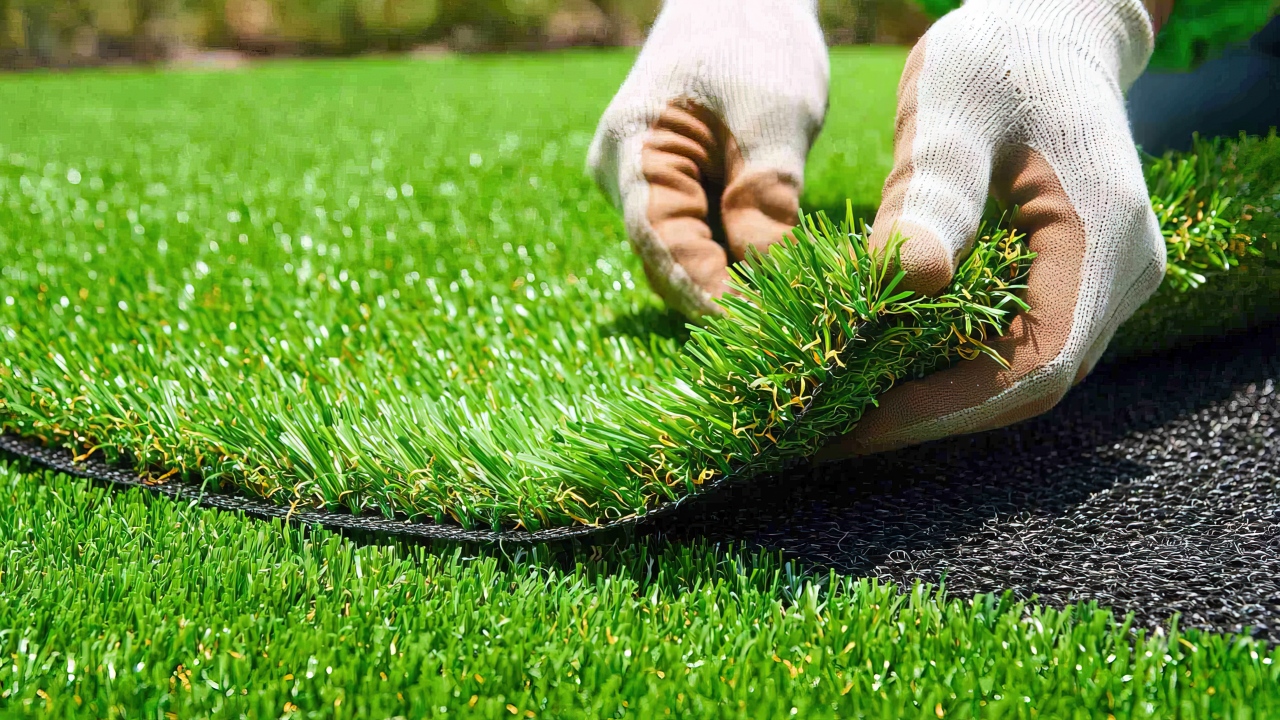
A sample lets your team assess the visible color, fiber shape, pile feel, backing, and overall construction before committing to a bulk order. Record the model and specification associated with the sample. Agree how the approved reference will be used during bulk production. If the sample is custom-made, confirm the preparation time and courier arrangements separately from transit time.
Put MOQ and lead-time conditions in writing
Ask when the production clock starts, what approval or deposit is required, and whether the stated timing covers production only or also packing and shipment. Confirm the quantity threshold and any conditions tied to stock, yarn, color, or OEM requirements. The written quotation is the source for the specific order.
Confirm labels and export packing
Agree whether packing is neutral, standard, or private label. Confirm label language, model or batch details, artwork approval, outer packaging, and handling marks needed by your receiving team. Ask for the final packing description before order approval so the purchase scope and shipment documents align.
Plan Export Details from China to Southeast Asia
Shipping terms determine who arranges transport and where cost and responsibility transfer. Confirm the named destination port and exact trade term stated in the quotation. Clarify who arranges export clearance, who handles import customs clearance, duties, and local charges, and which documents the seller will provide.
Ask the supplier to confirm the packing list basis, estimated shipment volume, container-loading plan, and whether freight is included or quoted separately. Freight and delivery costs depend on the destination and agreed terms. Request a current order-specific quotation. Have your broker confirm import requirements and local charges for your destination market.
How to Compare Artificial Turf Quotes from China
Put each offer into the same comparison sheet before choosing a supplier. Check that quotations use the same product category, model, yarn, pile height, stitch rate, Dtex, backing, color, roll format, and quantity. Then compare what is included: samples, labels, packing, inspection, export documents, freight, and optional components.
Compare the delivery term, named port, production schedule, payment milestones, quotation validity, and exclusions. Separate the product price from freight, import charges, local delivery, and installation costs. If an offer is materially cheaper, ask which specification or service scope differs. Do not assume the difference is a bargain or a quality problem without checking the details.
A practical RFQ should include:
- Destination country and port or delivery point
- Application and estimated area or order quantity
- Product category and required specification, or a request for options
- Preferred color, roll dimensions, and packing requirements
- Sample request and approval schedule
- Wholesale, OEM, or private-label requirements
- Target order and shipment timing
- Requested trade term and required documents
What Sunithgrass Can Confirm for Your Inquiry
Sunithgrass is a China-based artificial grass manufacturer. We produce PE and PP yarn in-house from raw materials and control production from extrusion to finished rolls. Our facility operates 8 tufting machines with a 30,000m² daily capacity. We supply landscape and sports turf among other product categories, with dedicated pages for landscape artificial grass and sports artificial grass.
For your quotation, share your application, quantity, required construction, destination, and any OEM or label brief. We confirm which product scope, customization options, sample arrangements, MOQ, packing, and schedule apply to your specific request. We keep those confirmations in the written quotation and order documents before approving production.
Request a Sample or Get a Wholesale Quote for Artificial Turf from China
Planning to source artificial turf from China for a Southeast Asian market or project? Send your product category, intended application, estimated quantity, required specifications, and destination port. If you are still comparing options, include your target use and budget range and ask which available models match the brief.
Request a Sample to review the product before bulk approval. Get a Wholesale Quote with your quantity, OEM or private-label requirements, packaging details, and preferred trade term. We confirm sample availability, MOQ, pricing, lead time, and export scope for each specific order.
Frequently Asked Questions
How can I verify whether a Chinese artificial grass supplier is a manufacturer?
Confirm the registered and contracting entity. Identify which production steps it performs in-house. Ask whether any products or processes are sourced from partner factories. Compare the answers with the catalogue, sample, and written quotation. A factory video supports the review but does not replace product-level confirmation.
What is the difference between an artificial turf manufacturer and an exporter?
A manufacturer produces some or all stages of the turf. An exporter manages overseas sales and shipment. One company may perform both roles. Another may source from a separate factory. Confirm the producing entity, seller of record, and export-responsibility split for your order.
What details should I send for an artificial turf wholesale quote?
Provide the destination, application, estimated area or quantity, product category, required specifications, roll and packing needs, sample request, OEM or label requirements, and target schedule. If some specifications are unknown, state the project use and ask the supplier to list available options.
Should I request a sample before placing a bulk order?
A sample helps you review the visible color, fiber, and backing construction before bulk approval. Confirm that the sample corresponds to the quoted model and record the agreed specification. Ask how the supplier references the approved sample during production and what differences are within the agreed tolerances.
Can I order OEM or private-label artificial grass?
This depends on the supplier’s confirmed service scope and order conditions. Provide your brand requirements and artwork. Ask the supplier to confirm feasibility, MOQ, sample approval, label and packaging details, and any effect on production timing in writing.
What should I confirm before shipping artificial grass to Southeast Asia?
Confirm the destination port, named trade term, packing and shipment volume, freight scope, export documents, and which party handles import clearance, duties, and local charges. Check destination-specific import requirements with your customs broker.
Does Sunithgrass provide local installation in Southeast Asia?
Sunithgrass supplies artificial grass. Buyers arrange site design and local installation with their own project team. Confirm the included supply scope in writing if your project requires additional services.