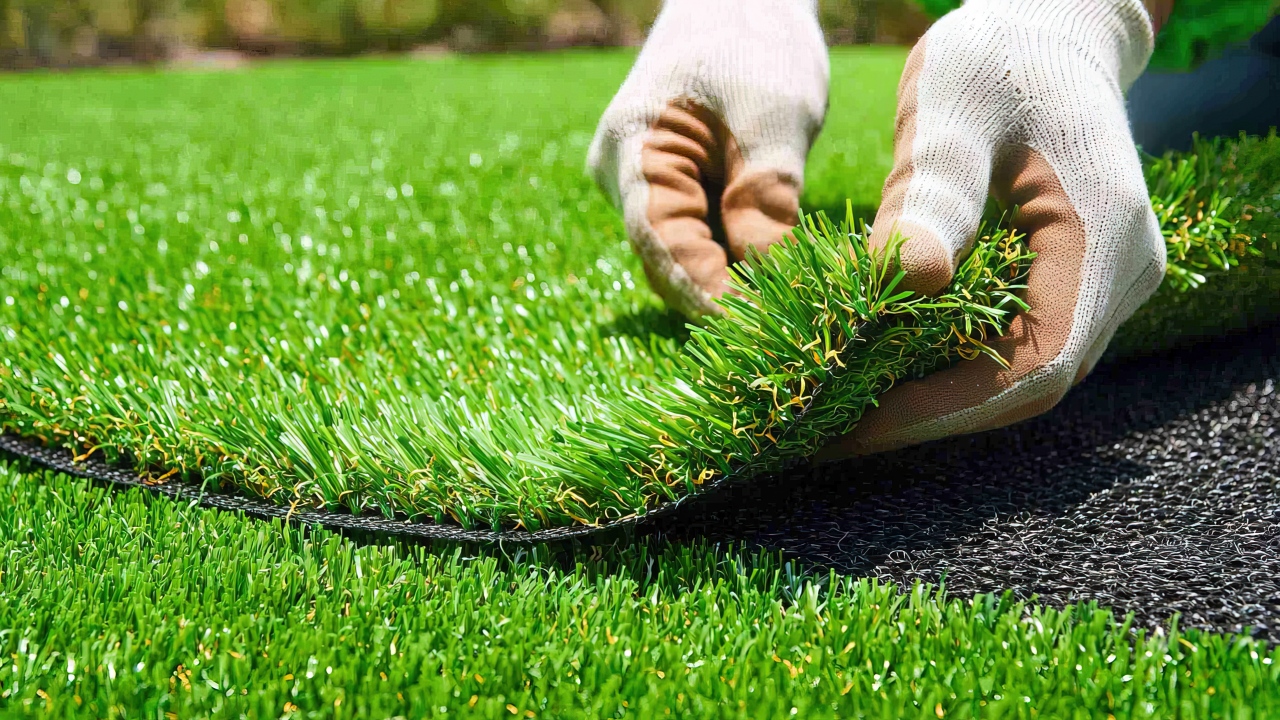
Introduction: The Problem Nobody Talks About
Landscape turf projects look perfect at installation. But when summer heat arrives, problems can surface. Fading fibers. Brittle texture. In some cases, melting near reflective surfaces.
This is not rare. By mid-afternoon in July, turf surfaces can exceed 180°F. Polyethylene, the main material in most artificial grass, begins to soften at 200-220°F. Under concentrated heat, fibers can deform or melt.
The good news: not all artificial grass is the same. Here is why heat damage happens and what to look for on your next project.
Part 1: Why Does Artificial Grass Get Damaged by Heat?
The short answer: physics and chemistry.
Most artificial grass is made from polyethylene (PE) or polypropylene (PP). These plastics are durable, but they have limits. When surface temperatures exceed 175-200°F, the polymer structure in the fibers starts to break down. The grass does not catch fire, but it can deform, shrink, or melt.
UV radiation is a slower but more serious problem. Over time, UV rays break down chemical bonds in the fibers. This causes fading, brittleness, and surface powdering.
The main causes of heat damage:
Low-quality materials. Some manufacturers use recycled plastics or insufficient UV stabilizers to cut costs. These break down faster under heat and UV exposure.
Surface-applied UV protection. Cheaper turfs often have UV inhibitors sprayed on after production. These wash off over time. Once gone, the fibers are unprotected.
Reflective heat. Low-E windows, metal surfaces, and curved glass can create hot spots well over 200°F. These can melt PE turf in specific areas.
Dark infill. Black rubber infill absorbs more heat than lighter options like silica sand or coated sands.
Part 2: How to Spot a Heat-Resistant Turf – What to Look For
Not all turf is created equal. Here’s what separates a heat-resistant landscape turf from one that will fail in 18 months.
- Raw Materials
UV stabilizers must be blended into the plastic during extrusion, not sprayed on afterwards. This creates protection that runs through the entire fiber.
Quality manufacturers use virgin PE and PP pellets, not recycled plastics of unknown origin. Recycled materials often contain contaminants that accelerate UV degradation.
- UV Stabilizer Technology
Advanced light stabilizers convert UV rays into harmless thermal energy, extending turf lifespan significantly. When evaluating a supplier, ask: “At what stage are UV stabilizers added to your product?”
- Backing Quality
The backing holds everything together. Double-layer PU backing provides better fiber lock than cheap SBR alternatives. But we use a double-layer backing on most of our turf to reduce fiber pull-out. Standard orders use SBR adhesive, which works well for most projects. For clients who need extra durability, we recommend upgrading to PU backing – the choice depends on your budget and performance requirements.
- Infill Choices
Infill affects surface temperature. Silica sand or coated sands absorb less heat than rubber and release it faster. Cork infill is another option that stays cooler. Ask your supplier what they recommend for your climate.
Part 3: What Sunithgrass Does Differently
At Sunithgrass, we’ve been manufacturing artificial grass for over 10 years. We’ve shipped to 40+ countries, including hot climates like the Middle East, Australia, and Southeast Asia. We’ve seen what works and what doesn’t.
Here’s what we do:
- Virgin PE and PP materials.
We use virgin plastic pellets, not recycled or mixed sources. This gives us a clean, traceable starting point for every batch of landscape turf and landscape artificial grass.
- UV stabilizers blended in, not sprayed on.
Our UV stabilizers are mixed into the plastic before extrusion. The protection runs through the entire fiber, not just the surface.
- Double-layer PU backing.
We use double-layer PU backing on most of our turf. This locks fibers in place and extends the life of the turf.
- Third-party test reports.
We provide test reports on UV resistance, fiber strength, and backing adhesion for the products we supply.
- Flexible warranty coverage.
Our warranty covers UV degradation, fiber wear, and backing integrity. Terms are adjusted based on project requirements and budget.
Conclusion: Heat Damage Is Preventable – If You Choose Wisely
Extreme heat does not have to ruin your turf projects. The difference between a lawn that fades in 18 months and one that stays green for 8-10 years comes down to material quality and manufacturing process.
Key takeaways:
- UV stabilizers must be blended into the plastic, not sprayed on
- Virgin PE and PP materials outperform recycled alternatives
- Double-layer PU backing prevents fiber pull-out
- Infill choices affect surface temperature
Ask for test reports before you buy
Ready to spec heat-resistant turf for your next project?